


- Home page
- Departments
- Clinical diagnostic laboratory
Clinical diagnostic laboratory
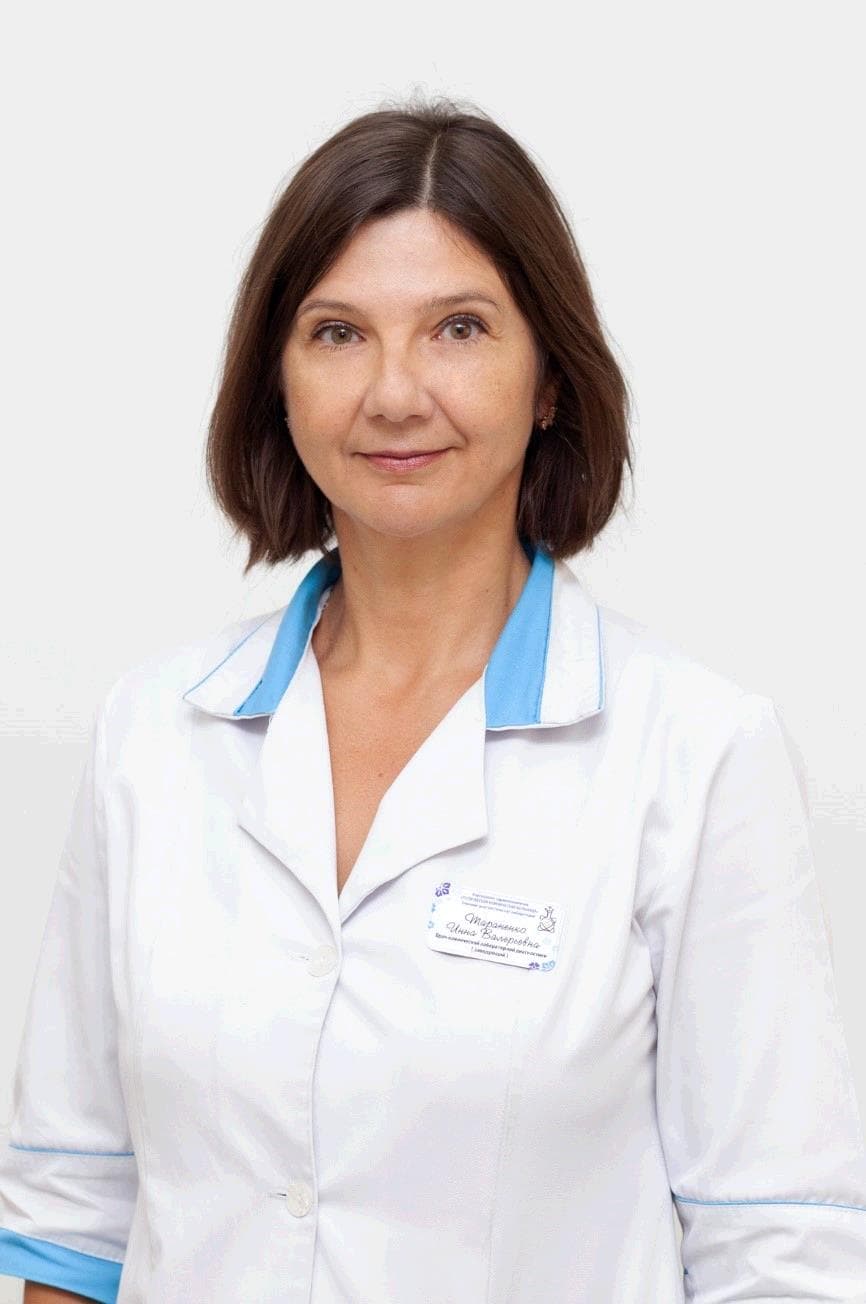
Head of Department
Taranenko Inna Valerievna
Specialization
Clinical laboratory diagnostics doctor
Qualification Category
First category
Types of research performed
General clinical studies:
- general urine analysis;
- urine analysis according to Nechiporenko;
- feces for occult blood.
Biochemical studies:
- protein;
- albumin;
- urea;
- creatinine;
- bilirubin and its fractions;
- glucose;
- uric acid;
- total cholesterol, high- and low-density cholesterol, atherogenicity coefficient;
- triglycerides;
- iron, ferritin;
- potassium, sodium, chlorine, calcium, magnesium;
- enzymes: AST, ALT, CPK, CPK-MB, LDH, ALP, GGT, amylase;
- C-reactive protein, rheumatoid factor, antistreptolysin.
Coagulation studies:
- INR, PTI, APTT;
- fibrinogen;
- D-dimer.
Immunohematological studies:
- blood group and Rh factor;
- alloimmune antibodies.
Hematological tests:
- complete blood count;
- platelets;
- reticulocytes.
Tumor markers:
- total PSA.
You can take tests without an appointment, after paying at the off-budget department.
Complete blood count, biochemical blood test
Blood donation on an empty stomach is a prerequisite. To obtain reliable results, the following conditions must be observed:
There should be at least 8 hours between the last meal and blood collection, and a light dinner with limited intake of fatty foods.
On the eve of the study (within 24 hours), as far as possible, exclude physical activity (sports training), taking medications (in consultation with a doctor). Alcohol intake at this time is also not allowed.
Immediately before blood donation, refrain from smoking for 1-2 hours, do not drink juice, tea, coffee (especially with sugar), you can drink clean, non-carbonated water. Eliminate physical exertion (running, climbing stairs quickly), and emotional arousal. It is recommended to rest and calm down 15 minutes before blood donation.
When performing biochemical studies, in particular, the determination of glucose levels and the lipid spectrum, it is mandatory to donate blood strictly on an empty stomach. To obtain reliable results, the following conditions must be observed::
At least 12 hours should pass between the last meal and blood collection, and a light dinner with a restriction on fatty foods should be served 1-2 days in advance.
Urine analysis
Urine is collected in a plastic container for examination.
Rules of preparation:
To obtain reliable results, the following conditions should be observed: it is not recommended to consume alcohol, spicy, salty foods, foods that change the color of urine (for example, beets, carrots) on the eve of the study (10-12 hours in advance); exclude diuretics as much as possible; perform a thorough toilet of the external genitalia before passing the analysis. It is not advisable to take an analysis for women during menstruation.
The test tube or container with the biomaterial should be delivered to the laboratory as soon as possible from the moment of collection (no more than 2 hours).
Stool examination for hidden blood
3 days before the analysis, it is necessary to exclude from the diet foods that, together with blood, can be catalysts in the reactions of its detection (substances that cause a false positive reaction to blood). These products include meat, fish, green vegetables, tomatoes. It is necessary to limit the intake of medications containing iron. You can eat eggs, potatoes, cereals, white bread, butter.
On the eve of the study, it is advisable to purchase a container for collecting and transporting feces at a pharmacy.
Instructions for the fence:
For the study, only freshly extracted feces obtained naturally on the day of the study is collected, feces are collected into a container with a spoon.
The container should be filled to no more than 1/3 of the volume.
Feces should not contain urine.
The material is delivered to the laboratory within 3 hours. It is advisable to keep the sample in the cold for the specified time.
Anazizer Park
Beckman Coulter, USA, Sysmex Corporation, Japan, ERBA Lachema Czech Republic, ALIFAX Italy, etc.
Schedule of the clinical diagnostic laboratory
| Department / Position | Contact phone number | Opening hours / receiving calls |
| Head of Department | 270-95-15 | - |
| Senior Paramedic laboratory assistant | 270-94-10 | - |
| Biochemical department | 270-93-98 | - |
| Coagulology department | 270-94-86 | - |
| Hematology department | 270-94-13 | - |
| Immunohematology department | 270-94-53 | - |
| KDL section in the admission department | 270-98-47 | - |